 For Brands
How to Write a Creator Brief That Gets You Good Videos (Free Template)
In this article
You send a creator a two-line message: "Post about our product. Make it fun. Tag us." Three days later you get a video that misses your key message, uses a claim you cannot make and goes live before you saw it. Neither of you did anything wrong. You just did not write the brief.
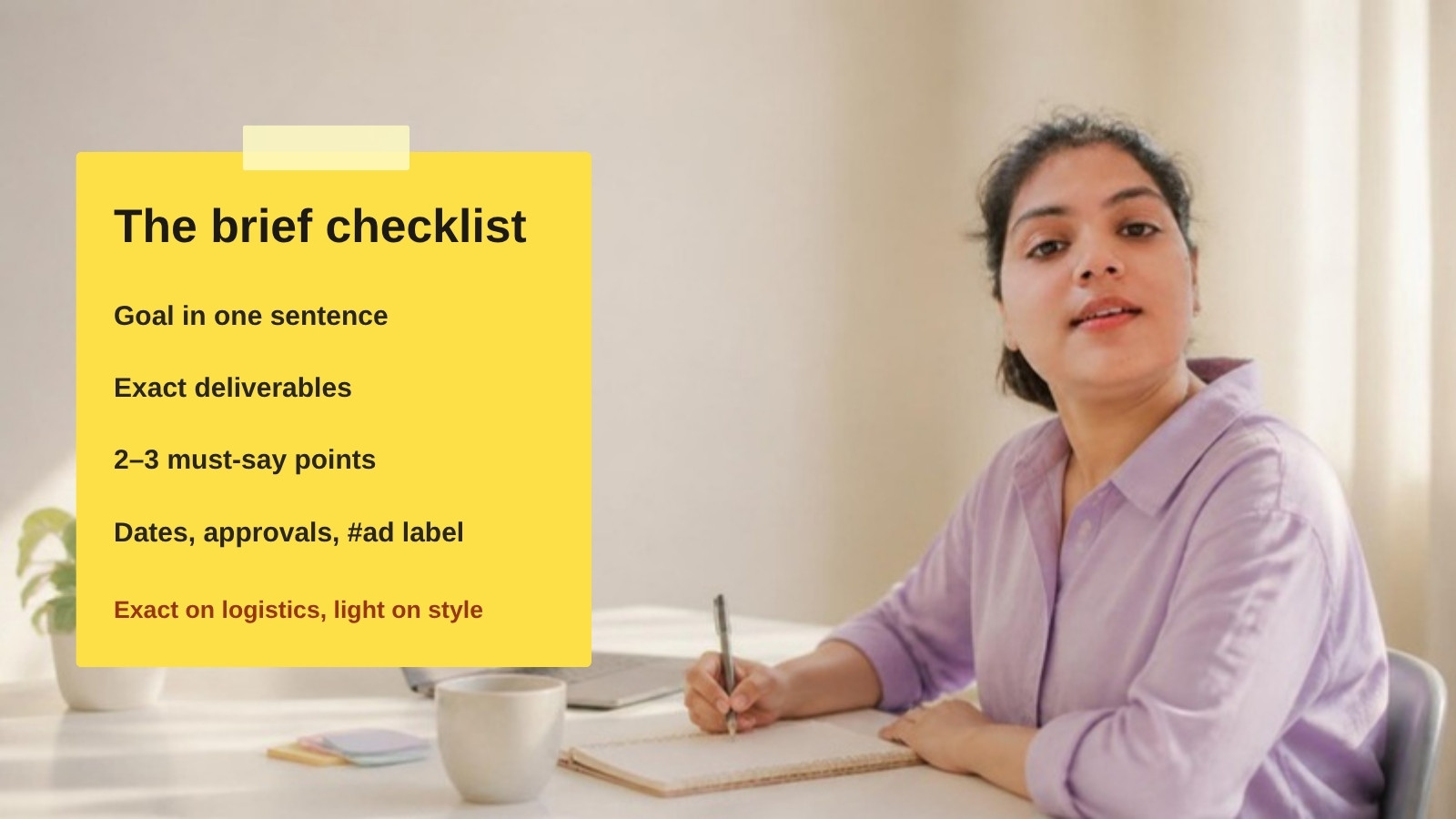
Most disappointing creator content traces back to the brief. The rule that comes up again and again in industry guides is simple: be precise about logistics, and light on creative control. Tell the creator exactly what, where and when. Leave the voice, the hook and the storytelling to them, because that is what their audience follows them for.
The ten things a brief should cover
- Objective: what success looks like, in one sentence (for example, "introduce our new face serum to people with oily skin").
- About the brand and product: what it is, who it is for, the price, and what makes it different, in a few lines.
- Audience: who you want to reach, so the creator can pitch it in a way that fits.
- Deliverables: exactly what you are paying for: number of posts, format (Reel, YouTube video, story), platform, length and any tags. Put this near the top so creators can judge the work quickly.
- Key messages: two or three things the video must communicate, not a script.
- Do's and don'ts: claims to avoid, competitor mentions, words that break your brand, and anything a regulator would care about.
- Creative direction: a few reference examples and the tone you like, with room for the creator's own style.
- Disclosure: how the post must be labelled. In India, ASCI's influencer guidelines expect a clear label such as #ad or the paid partnership tag, and they apply to brands and influencers together.
- Timeline and approval: shoot date, draft date, how many rounds of feedback you get, how long each side has to respond, and the posting date.
- Payment and rights: the fee, when it is paid, and how long you can reuse the content. See how to pay for results.
What to leave out
- A full script. Creators who read a script sound like they are reading one, and audiences notice.
- Twenty rules. Too many restrictions make the collaboration feel forced and the video feel like an ad.
- Vague asks. "Make it viral" is not a brief. Describe what you want people to do or understand.
- Unsupported claims. If you cannot back a claim, do not ask the creator to make it. This matters most for skin, health and finance products.
A fill-in template
Copy this into a document, fill it in and send it. Keep it to one or two pages.
| Section | What to write |
|---|---|
| 1. Goal | One sentence on the result you want. |
| 2. Product | Name, price, who it is for, two standout points. |
| 3. Deliverables | Number, format, platform, length, tags. |
| 4. Must-say points | Two or three messages, in your words. |
| 5. Avoid | Claims, competitors, topics, words. |
| 6. Style | Two example videos you like, and the tone. |
| 7. Disclosure | #ad or paid partnership tag, placement. |
| 8. Dates | Draft due, feedback window, post date. |
| 9. Payment | Fee, stages, payment date, usage rights and duration. |
| 10. Reporting | Which numbers, when, and the unique link and code to use. |
The same brief, many creators
A brief is also how you compare creators fairly: everyone gets the same instructions, so differences in the result come from the creator, not the brief. A contest takes this further. On EarnLeague, you post one brief and a prize pool, and many creators respond to it, so you see the variety in one place. If you want to try it, create a campaign. For a launch, this brief slots straight into the six-week playbook.
Be exact about what, where and when. Be relaxed about how.
Ready to run a campaign?
Set a brief and a prize pool, and creators compete on it.