 For Brands
Influencer Marketing Platforms for Brands in India: 6 Options With Pros and Cons
In this article
You have ₹50,000 for your first round of influencer marketing and three browser tabs open. One platform wants you to book a demo before it will say a price. Another shows creator rates upfront but takes a fee on every order. A third says a "campaign manager" will get back to you within three days.
They all say they will connect you with creators. What they do not tell you is that they are built on four different models, and each model fails brands in a different way. Pick the wrong model and you end up with the problems most brands complain about: endless back-and-forth, fees before any result, and no clear way to see what a post actually delivered.
This guide compares six platforms a brand can use in India, with the advantages and disadvantages of each. Details are from each platform's public pages and third-party reviews as of September 2026. Pricing changes often, so confirm the current terms before you commit any money.
Four models, not six brands
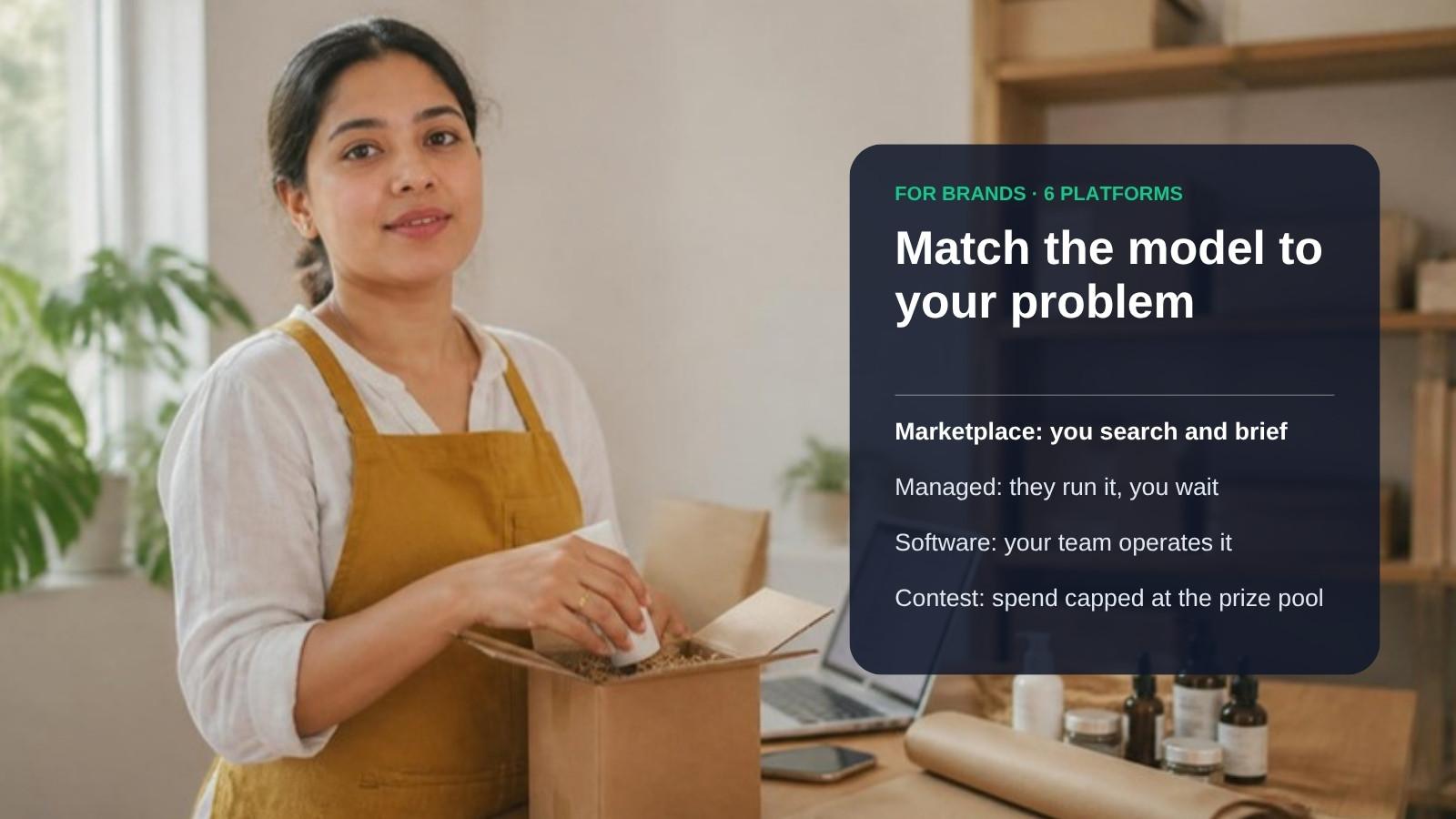
- Marketplace: creators list rates, you browse and order. You do the searching and briefing, but you see prices upfront (Collabstr).
- Managed campaigns: you send a brief, the platform shortlists creators and runs the campaign. Less work for you, more cost and more waiting (Plixxo, and the managed side of Kofluence).
- Software you operate: discovery, outreach and reporting tools for a marketing team that will run campaigns itself. You still pay creators separately (Aspire, and self-serve tools like Winkl).
- Contests: you set a brief and a prize pool, and many creators compete on it. You pay for the prize pool, not for a single negotiated deliverable (EarnLeague).
The six platforms, side by side
What each one gets you, and where it falls short. None of them can promise a specific reach or sales result, which is covered in the next section.
| Platform | Model and best for | Advantages | Disadvantages |
|---|---|---|---|
| Collabstr | Marketplace. Small brands that want to see prices before talking to anyone. | Creators set their own rates for specific deliverables (a video, a review, a post), so you can budget before you message anyone. Payment is held until the creator delivers. | Browsing is free, but third-party reviews report a fee of around 10% on each order and paid plans for heavier use. You do the searching, the briefing and the follow-up yourself. |
| Kofluence | Marketplace plus managed execution. High-volume, India-focused campaigns. | Large creator database (the company cites 600,000+ registered creators), AI-based matching, fraud checks and real-time campaign reports. It also offers a performance-based campaign option where you pay against clicks or conversions. | Pricing is not published. Fees depend on each creator's reach and your deliverables, which is flexible but makes it hard to compare quotes across platforms. |
| Winkl | Self-serve tool. Startups and in-house teams working with micro and nano creators. | Built for smaller D2C brands, with discovery, campaign management and performance tracking on one dashboard, and access to smaller niche creators who are usually cheaper. | Reviews say you need a demo or sales call before you see pricing, so you cannot simply log in and test it. You manage the creators yourself. |
| Plixxo | Managed campaigns. Beauty, fashion and lifestyle brands with a larger budget. | Large network (26,000+ influencers is the figure usually cited) with a strong women's lifestyle community. You share a brief, get a list of creators with their quotes, and pick. | One comparison puts managed campaigns at ₹2 lakh and above, and agency-style campaigns can take weeks from brief to live. It works on campaigns, so it is a poor fit for a quick small test. |
| Aspire | Software you operate. Larger brands and teams running many creator relationships. | Deep tooling for discovery, relationship management and reporting, useful when several people run creator programmes at once. | Pricing is quote-only. Third-party trackers estimate it from roughly $2,000 a month on an annual contract, before you pay any creator. Too heavy for a first campaign. |
| EarnLeague | Contests. Brands that want many creators competing on one brief, and results they can see. | The full prize pool is funded and held in escrow before the contest goes live. Entries come from verified, connected accounts and are ranked on real platform metrics like views and likes, so you can see what each entry earned. Every submission passes moderator checks. | A newer platform with a smaller creator pool than the big networks. A contest gives you many competing entries, not one custom deliverable negotiated with a chosen creator, so it suits campaigns where volume and public performance matter. |
Tools built only for brands and agencies, such as Qoruz, GRIN and Upfluence, also exist. They are discovery software with no creator sign-up, so they belong in the "software you operate" group above.
What no platform can promise you
Every model above shares one limit: no platform can guarantee reach, likes or sales. A platform that says it can is selling you something. What you can control is how much of your money is at risk before you see a result, and how clearly you can see what happened afterwards.
Before paying anyone, ask these six questions. They are the ones that most often decide whether a campaign feels transparent or frustrating:
- What exactly do I pay, and when? Is it a subscription, a fee on every order, a management fee, or all three? Is any of it due before a creator delivers?
- Where does my money sit until the work is done? Escrow or held payment is safer than paying a creator or agency upfront.
- How will I see views, likes and shares? Numbers pulled from the platform itself are more reliable than screenshots the creator sends.
- Who is between me and the creator? Every extra layer (an agent, a campaign manager) adds time and usually cost.
- What are the usage rights? Can you reuse the video in your own ads, and for how long?
- What happens if the creator does not deliver? Ask for the refund or replacement process in writing.
How to choose in five minutes
- Small budget, want to control every step: a marketplace like Collabstr, or a self-serve tool like Winkl. Expect to spend your own time.
- Larger budget, want someone else to run it: a managed option like Plixxo or Kofluence. Ask for the full cost and the timeline first.
- A team running creator programmes all year: software like Aspire starts to make sense.
- You want many creators, verified numbers and a fixed prize budget: a contest. If you are new to it, read how contest formats work and pick the one that fits your product.
You can also use two models together, for example a contest to find creators who perform well, then a marketplace order or managed deal with the best ones. If you want a creator's point of view on the same platforms, this creator-side comparison shows what they see when they sign up.
Choose the platform whose model matches your problem, not the one with the longest creator list.
Ready to run a campaign?
Set a brief and a prize pool, and creators compete on it.