 For Brands
Paying Influencers in India: TDS, GST and Invoice Basics for Brands
In this article
You agreed to pay a creator ₹30,000 for a Reel. She sends a UPI ID. You pay it. Three months later your accountant asks: "Did you deduct TDS on that? Did you get an invoice?" You did neither, and now the cleanup costs more than the post did.
Paying creators is a business expense, and like any business expense it comes with paperwork. This is a plain-language overview to help you ask the right questions, not tax advice. Rules, rates and thresholds change, so confirm the details with a chartered accountant before you pay anyone.
A note on section numbers
From 1 April 2026, India's Income-tax Act, 2025 folded most TDS provisions into a single section (section 393). Many guides and older paperwork still use the earlier numbers, such as 194J for professional fees and 194R for benefits. The underlying ideas carry over, but ask your CA which section and rate to use today, because old section numbers can cause problems when filing.
Four situations, and what may apply
| Situation | What may apply | Keep on file |
|---|---|---|
| You pay a creator a fee for content | Creator fees are commonly treated as professional fees, so TDS may need to be deducted once payments cross a yearly threshold. Guides usually cite a 10% rate. If GST is shown separately on the invoice, TDS is generally worked out on the amount before GST. | Invoice, creator's PAN, payment proof, and the TDS deducted |
| You send free products the creator keeps | CBDT's guidance on the benefits and perks rule says products given to an influencer and retained can count as a benefit, with TDS at 10% once the total value to that person in a year crosses a threshold (roughly ₹20,000 under the earlier rule). A product that is only borrowed for a review and returned generally does not count. | Product value, whether it was kept or returned, and a delivery record |
| The creator is registered for GST | They should issue a GST invoice with their GSTIN. If you are GST-registered, ask your CA whether you can claim input credit on it. | Tax invoice showing GST separately |
| The creator is not registered for GST | Many small creators are below the registration threshold (generally ₹20 lakh a year for services). They can still send a regular invoice without GST. | Invoice with their name, address and PAN |
Whether you must deduct TDS at all depends on what kind of business you run and your turnover. For example, some individuals and small proprietors are not required to deduct below certain limits. This is one to ask your CA about early.
The paperwork to collect before you pay
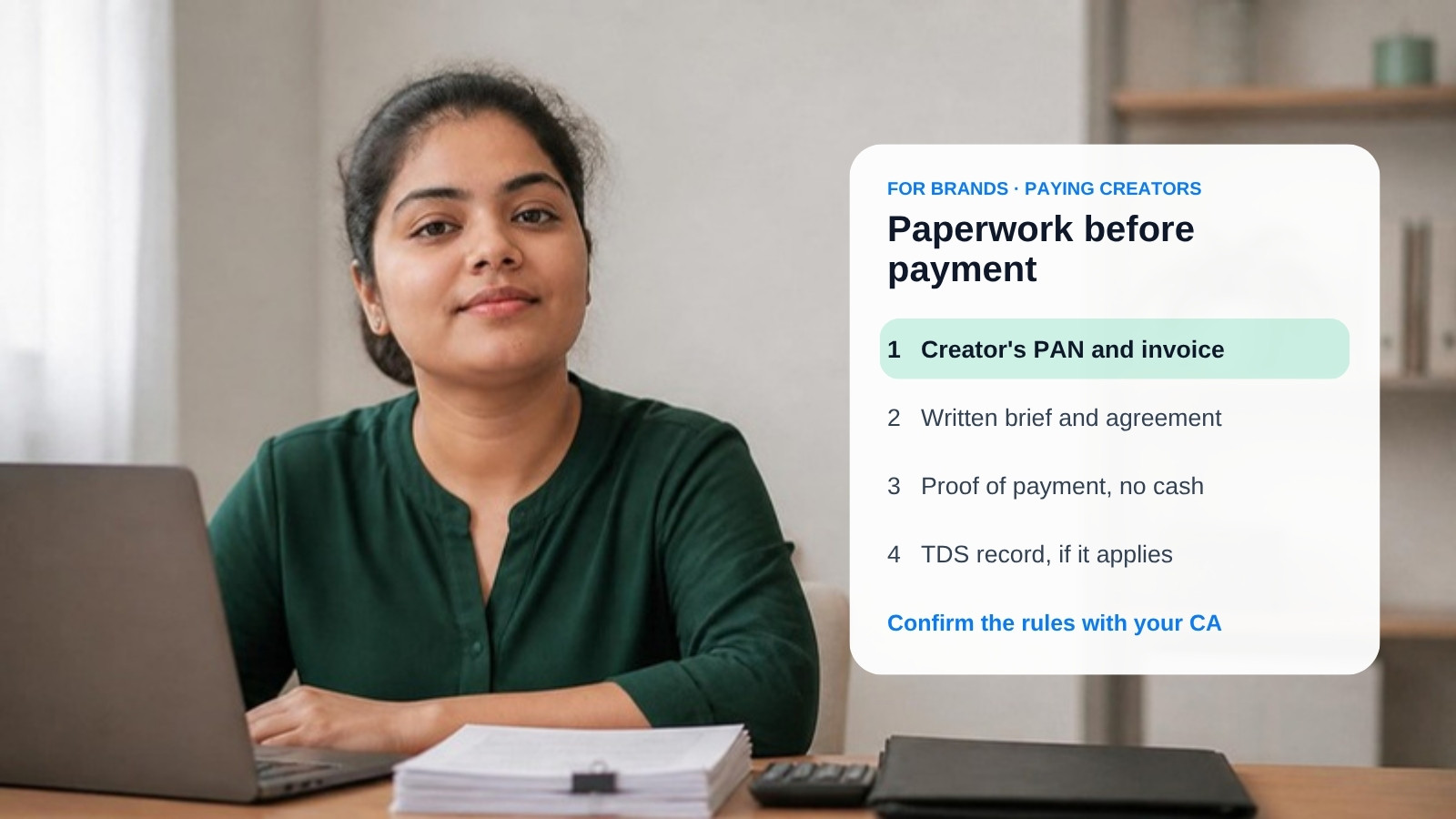
- The creator's PAN. Without it, TDS can be charged at a higher rate, so ask for it upfront.
- A proper invoice with the creator's name, details, description of the work, amount and GST (if registered).
- A signed agreement or written brief stating the fee, deliverables, dates and usage rights. See how to write a creator brief and how to pay for results.
- Proof of payment through a bank or UPI, not cash.
- A TDS record for any tax deducted, so you can deposit it and give the creator the certificate they need.
Do not forget disclosure
Tax is one obligation. Another is disclosure. ASCI's influencer guidelines expect paid or gifted promotions to carry a clear label, such as #ad or the paid partnership tag, and ASCI writes to both the influencer and the brand when it flags a post. Put the label requirement in your brief.
What this means from the creator's side
Creators are dealing with their own version of this: GST registration, TDS certificates and reporting brand income. If you want to understand what they will ask you for, read GST and taxes for influencers. Creators who can hand you a clean invoice and a PAN are usually easier to work with.
Questions to ask your CA
- Am I required to deduct TDS on creator payments, and at what rate and threshold today?
- How should I treat free products I send to creators?
- Can I claim GST input credit on creator invoices?
- How do I deposit the TDS and issue certificates to creators, and by when?
- Does my agreement need any clauses to cover tax?
Do the paperwork when you pay, not when the notice arrives.
This article is general information as of September 2026 and is not legal or tax advice. Rules change, so verify current provisions with a qualified professional.
Ready to run a campaign?
Set a brief and a prize pool, and creators compete on it.