 For Brands
How to Find the Right Creators for Your Brand: 6 Routes With Pros and Cons
In this article
You know you want creators to talk about your product. What you do not know is where to find them. Searching Instagram gives you thousands of accounts, an agency sends a list you cannot check, and the loudest names are the most expensive. You end up guessing.
Finding creators is a process you can run yourself: pick a discovery route, build a shortlist, vet it, then start with a small test. This guide compares six routes and shows a simple outreach and vetting method.
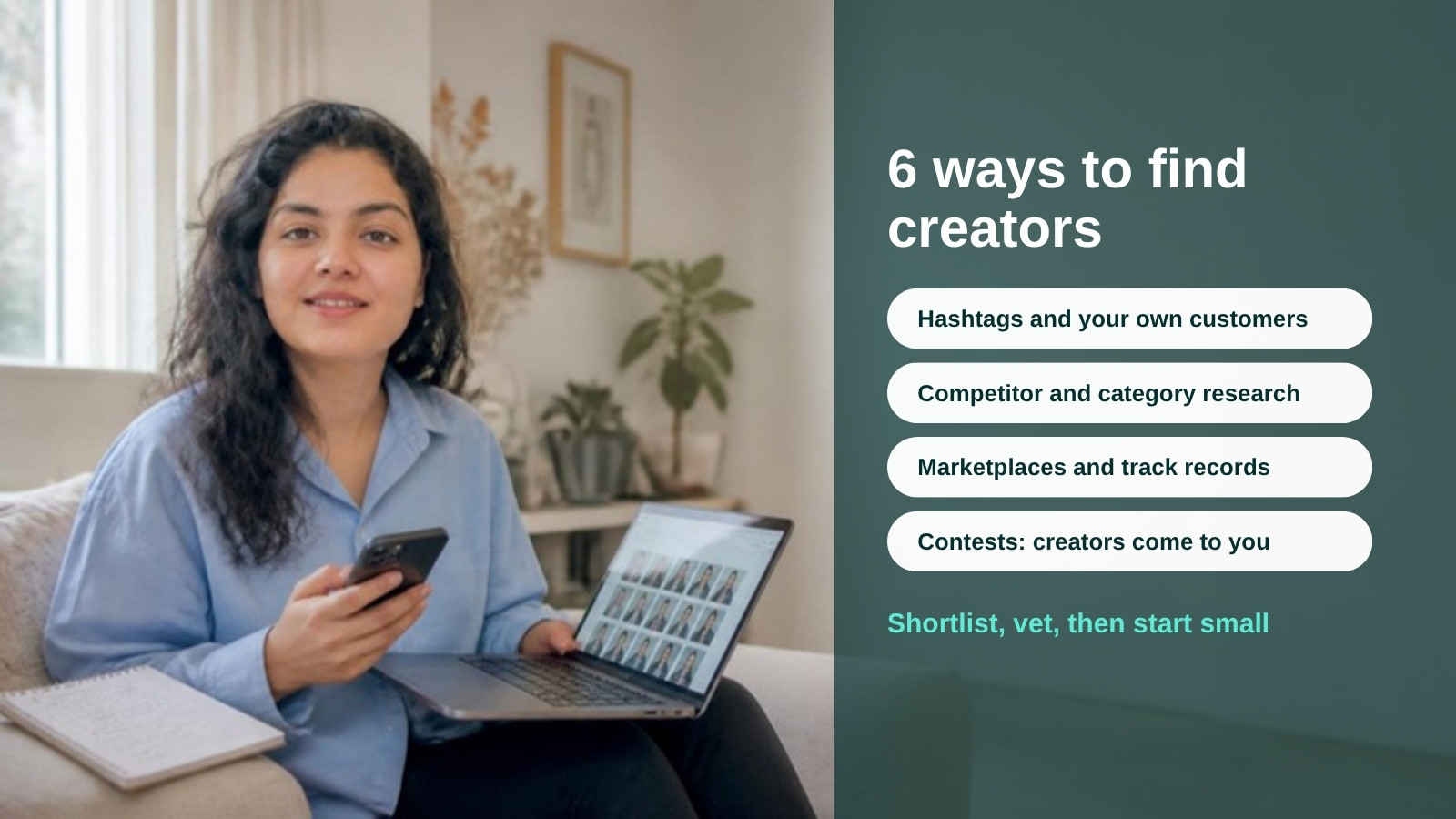
Six ways to find creators
| Route | How it works | Advantages | Disadvantages |
|---|---|---|---|
| Hashtag and keyword search | Search niche hashtags and terms, then look at top posts and recent posts by smaller creators. | Free, and it shows who is actively posting about your category right now. | Slow, and hashtags alone do not tell you about audience quality. |
| Your own customers and tags | Look at who already tags your brand, reviews your product or follows you. | Genuine fans are often the most convincing, and often the most affordable. | Small numbers, and you cannot rely on it for volume. |
| Competitor and category research | See who works with similar brands, then approach creators in the same space. | They already understand your category and have shown they take brand work. | A creator may have exclusivity limits, or their audience may be tired of the category. |
| Marketplaces and platforms | Browse creators who have listed themselves on a platform, and filter by niche and location. | Fast, with rates and details organised for you. | Fees, and profiles are self-reported. See the platform comparison. |
| Creator directories with track records | Browse public profiles that show real past results, such as EarnLeague's creators page. | You can judge on past performance, not only follower counts. | Smaller pool than the big networks, and coverage of some niches is thin. |
| Contests | You post a brief and a prize pool, and creators come to you with entries. | Many creators on the same brief, so you can compare directly. | You get entries, not a one-to-one negotiated deal, so it suits awareness and content goals best. |
Most brands use two or three routes together, for example hashtags plus their own customers, then a contest to widen the pool.
Build and vet a shortlist
Aim for 15 to 20 names, then narrow to five to eight. For each, check:
- Activity: do they post regularly, and has their reach held steady?
- Audience fit: location, language and age match your buyer.
- Real engagement: comments that sound like people, not generic emoji. See how to check an audience.
- Content quality: five to seven past videos, as described in getting quality without overpaying.
- Past brand work: have they promoted competitors recently, and was it clearly labelled?
A short outreach message that gets replies
Keep it brief, specific and clear about the money. Something like:
Hi [name], I loved your video on [specific video]. I run [brand], which makes [product] for [audience]. We are looking for a paid collaboration on one Reel, with a budget of ₹[amount] and a sample sent first. Would you like the brief? I can share the details, timeline and usage terms.
Mention a real video, name a budget range and offer the brief. Creators often ignore messages that are vague about payment. When they reply, send a proper creator brief and agree payment terms in writing.
Start with a pilot
Before committing to a long programme, run a small paid test with two or three creators, read the numbers at 7 and 30 days and only then extend. If the list still feels thin, a contest is one way to bring new creators to you: create a campaign and see who responds.
You do not need a perfect list. You need a good shortlist and a small test.
Ready to run a campaign?
Set a brief and a prize pool, and creators compete on it.